During medication-assisted smoking cessation, oral issues such as dry mouth and taste changes may trigger relapse.
The oral side effects of the two drugs differ; understanding the differences enables targeted care.
Oral Precautions When Using Bupropion and Varenicline
The first time I got a prescription at the Third Municipal Hospital's smoking cessation clinic, the doctor spent a long time explaining nausea, vivid dreams, insomnia, and "stop the medication immediately if you have any emotional abnormalities," and only casually added at the end: "If your mouth gets dry, drink more water."
Three months later, I realized: that sentence was not enough.
For someone with a 12-year smoking history, peaking at one to one and a half packs per day, the places where you are most likely to stumble when using medication to quit smoking are often not about "whether the drug works," but **those seemingly minor oral discomforts**—dry mouth so severe your tongue feels rough, taste like there is a plastic film over it, sudden pain when brushing your teeth, waking up in the middle of the night with your mouth feeling like it is full of paste. These won't make it into the headlines of smoking cessation success stories, but in the 2nd and 3rd weeks, they will make your hand reach for that pack of cigarettes you haven't thrown away yet.
This article covers only one thing: **What actually happens to your mouth during bupropion (extended-release) and varenicline treatment, how to care for it, and when you must seek help.** I write from personal experience cross-checked against public data, not as a prescription you should follow on your own—prescription drugs must be evaluated by a doctor.
1. Why "Medication to Quit Smoking" Requires Separate Oral Care
Among non-nicotine prescription drugs, the two most commonly discussed lines in domestic outpatient clinics are:
| Drug | Common Role (Simplified) | Most Common Oral-Related Issues |
| **Bupropion Extended-Release** | Originally an antidepressant, later found to aid smoking cessation; often started about 1 week before the quit date, with a course of 7–12 weeks | **Dry mouth** is very common; insomnia aggravates nighttime dry mouth |
|---|---|---|
| **Varenicline** | Nicotine receptor partial agonist, reduces cravings and smoking pleasure; often started 1 week before the quit date, with phased dose escalation | **Dry mouth**, **taste changes/disorders**, nausea disrupts eating and cleaning habits; literature also mentions toothache, occasional mucosal discomfort; very rare orofacial swelling requires emergency treatment |
In patient education materials from Mayo Clinic and other institutions, the common side effects of bupropion explicitly include **xerostomia (dry mouth)**; varenicline commonly causes nausea, taste changes, difficulty sleeping, and abnormal dreams. Varenicline tartrate prescribing information lists **dry mouth, toothache** among gastrointestinal-related issues, with **ulcerative stomatitis, gingival pain** noted as less common; there are also warnings about severe reactions including swelling of the face, mouth (tongue, lips, gums)—these are not "just bear with it" but require stopping the medication and seeking medical attention.
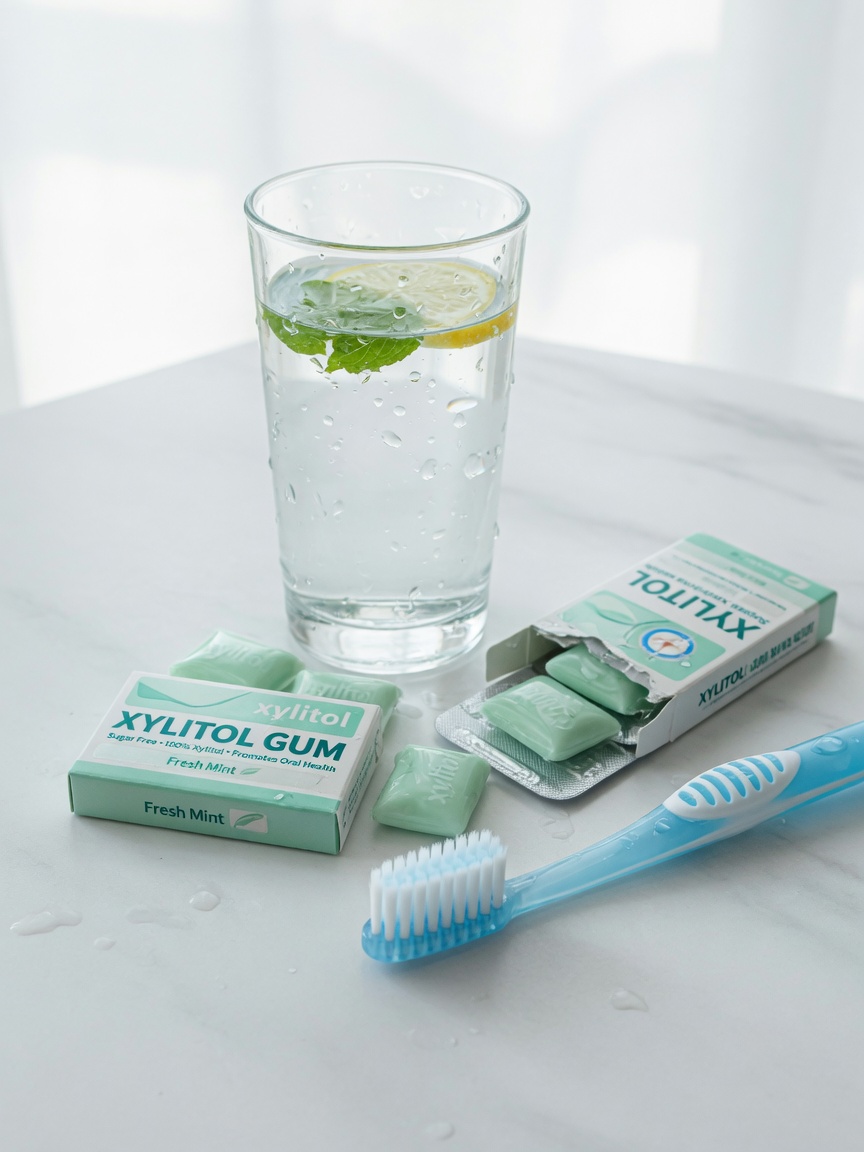
MSKCC and other institutions give very straightforward practical advice: **For dry mouth or throat discomfort, drink more water, suck on sugar-free candy or chew sugar-free gum.**
My personal view is clear:
**The value of medication assistance is helping you endure cravings; the value of oral care is preventing "mouth discomfort" from pulling you out of the treatment course.**
Many people dismiss dry mouth as a "minor issue," only to start consuming sugary drinks and hard candy in the 3rd week, raising cavity risk, and when their teeth ache, they want even more to "have a smoke to calm down"—this is the dumbest and most common chain reaction I have seen.
2. Oral Differences Between the Two Drugs (How I Experienced It)
1. Bupropion: Dry Mouth Is the "Main Theme," Sticky and Clingy
**My medication schedule (narrative reference only; follow your doctor's orders):**
The clinic prescribed extended-release bupropion in mid-March. Week 1: 150 mg once daily (morning); from Week 2: 150 mg twice daily (morning and early afternoon, avoiding late times that could affect sleep). Target quit date was set for day 8 of medication.
**Oral timeline:**
- **Days 2–3 of medication:** During an afternoon meeting, my tongue stuck to my palate; I had to drink two glasses of warm water in a row from the water cooler to recover. This wasn't "withdrawal dry mouth"—I was still smoking reduced amounts that day, and the medication had already started causing dry mouth.
- **End of Week 1:** Dry mouth was worst on waking. The white coating on my tongue was even more pronounced than during peak smoking. When brushing, the toothpaste foam felt "pasty" in my mouth; I rinsed three times and still felt rough.
- **Weeks 2–4 (after quitting):** Daytime dry mouth persisted but was more manageable than Week 1; what really hurt was **those nights of insomnia**—waking up at 2 AM with a mouth like a desert, drinking water then running to the bathroom, cycling several times, leaving my gum margins more sensitive the next day.
- **Weeks 6–8:** Frequency of dry mouth decreased, but it still appeared reliably under the triple combination of "air-conditioned room + coffee + lots of talking."
With bupropion, my sensation of dry mouth was: **persistent, leaning "dry and rough"**, not like the acute thirst of a fever, but rather saliva becoming less, stickier, with insufficient mucosal lubrication. Public data shows dry mouth, insomnia, and headache are a common combination—insomnia amplifies oral problems through mouth breathing and reduced nighttime water intake.
**Mistakes I made:**
On day 10 of medication, I bought a bottle of iced lemon tea from the convenience store to quench my thirst and finished half a bottle in one day. That evening, my teeth ached sharply when exposed to cold. When the mouth is dry, saliva's buffering capacity decreases, and sugary, acidic drinks are like opening an accelerated corrosion channel on your tooth surfaces. The next day, I switched to plain water + sugar-free xylitol gum, and the sourness significantly eased.
2. Varenicline: Dry Mouth + Taste Confusion + Nausea—"Three Fronts Fighting"
My second formal course (about a year later, after relapsing) used varenicline starter pack. The titration was roughly: Days 1–3: 0.5 mg once daily → Days 4–7: 0.5 mg twice daily → From Day 8: 1 mg twice daily (consult the prescribing information and your doctor for specifics). The quit date was set around Day 8 of medication.
**Oral and related sensations:**
- **Days 3–5:** Mild nausea; I only ate half a steamed bun for breakfast. Gagging was stronger than usual when brushing—cleaning quality dropped sharply, and tongue coating began to thicken.
- **End of Week 1:** Taste felt "off." The tomato beef brisket noodles downstairs from the office, which I used to enjoy, now tasted overly salty with a slightly metallic aftertaste. **Taste disorders/changes in taste** are not uncommon per the literature; the sensation is simply "food doesn't taste right," easily leading to loss of appetite or, conversely, craving heavy snacks.
- **Weeks 2–3:** Dry mouth appeared, slightly milder than with bupropion, but combined with nausea-induced reduced drinking and chewing, **the actual oral dryness was not weaker.** For two days, my left upper molar ached when biting down. I was very anxious; later, the dentist found it was old filling margin irritation + short-term inadequate cleaning, not "the medication damaged my teeth," but the prescribing information does list **toothache**, so it's worth checking.
- **Never experienced** lip, tongue or throat swelling, or difficulty breathing—these are serious reactions requiring immediate discontinuation and medical attention; the probability is low, but it's not something to joke about.
In Cochrane reviews and other evidence summaries, varenicline shows outstanding overall smoking cessation efficacy; mild to moderate nausea is most common and usually decreases over time. My assessment:
**Varenicline's oral troubles are often not just "dry mouth," but nausea disrupting eating and brushing, taste altering dietary choices, and dry mouth reducing self-cleaning—three things stacking together.**
Bupropion is more "focused": dry mouth + insomnia have a clear chain, making them easier to address.
3. Why Dry Mouth Isn't "Just a Little Uncomfortable"
Saliva doesn't just moisten the mouth. It is involved in:
- **Washing away food debris and bacteria**
- **Buffering acids, protecting tooth enamel**
- **Providing antibacterial and remineralization components**
- **Helping taste molecules dissolve, so you can "taste"**
Mayo Clinic and other organizations are highly consistent in their dry mouth advice: sip water throughout the day, chew sugar-free gum or suck on sugar-free hard candy to stimulate saliva production, limit sugary and acidic items, consider xylitol-containing products, avoid habits that worsen dryness, and emphasize that people with dry mouth **are more prone to cavities** and need more active oral hygiene and dental follow-up.
Medication-induced dry mouth (both bupropion and varenicline can be involved) essentially strips away a layer of protection during an already vulnerable period of smoking cessation. Smokers already have more tartar, poorer gum response, and messy cleaning habits; when they stop smoking, gums may bleed more (blood flow recovers, inflammation "surfaces"), and with dry mouth added—**Weeks 2–6 are a high-risk operation window for cavities, mucosal damage, and bad breath fluctuations.**
My clear stance:
- **Don't use sugary mints as "quit-smoking substitutes."** The hand habit is understandable, but your teeth will pay the price.
- **Don't use high-alcohol mouthwash to "freshen up."** In Week 1 of bupropion, I used a throat-stinging mouthwash; the dryness and heat stacking, and the next day the inside of my lips was burning.
- **When dry mouth is severe, prioritize "stimulating real saliva."** Artificial saliva/dry mouth specialty products are a backup, not a first line.
4. Medication-Specific Care: What Actually Worked for Me
A. On Bupropion: Focus on "Dryness + Nighttime"
- **Drink water rhythmically, not in binges**
I set it in my phone's notes: 3 cups in the morning, 3 cups in the afternoon, 1 cup after dinner (each cup about 200–250 ml). When dry mouth strikes, switch to "small sips, frequent" to avoid drinking 500 ml at once then running to the bathroom, disrupting sleep.
- **Sugar-free xylitol gum: Work essential**
Chew 5–10 minutes each time, 3–5 times a day is enough. Use it before meetings, before driving (after parking), and when the urge to smoke strikes. Large amounts of xylitol may cause bloating or diarrhea; don't treat it like a meal.
- **The hidden relationship between medication timing and oral health**
Try not to take the second dose into the evening—insomnia will make you sleep with your mouth open, doubling nighttime dry mouth. When I took my second dose before 4 PM, nighttime dry mouth was noticeably better than on the days when I took it after dinner.
- **Nighttime emergency kit**
Keep a small flask of warm water + a tube of non-irritating toothpaste by the bedside (not strictly necessary), but **nasal patency is very important.** If you have rhinitis, rinse with saline to reduce mouth breathing—half the battle against dry mouth is fought in the nose.
- **Contraindications (just a reminder, not a scare)**
History of seizures, eating disorders, etc., are important contraindications for bupropion and must be assessed by a doctor. Self-increasing the dose won't make dry mouth disappear; it will only increase risks.
B. On Varenicline: Focus on "Nausea—Cleaning—Taste—Red Flags"
- **During the nausea period, lower your standards but don't drop to zero**
In Weeks 1–2, I switched to: brush for only 2 minutes with a soft brush in the morning, focusing on chewing surfaces and lower front teeth; always complete evening brushing, even if I had to sit and rest for 10 minutes first. If gagging occurs, pause for 30 seconds and continue; don't force yourself to the point of vomiting.
- **Medication and meals**
Doctors often advise taking it after meals with plenty of water (follow the prescribing information). I fixed it to after breakfast and after dinner; nausea was milder than on an empty stomach. When nausea is severe, eat bland, warm food, less fried food—acid reflux makes teeth sore and mouth bitter, making oral care even harder.
- **How to eat when taste is disrupted**
- Don't try to "force through" with saltier or spicier foods; it easily damages mucosa and worsens dry mouth.
- Use temperature and texture to find comfort: warm porridge, steamed eggs, soft noodles.
- Note "strange tastes" in your notes; most people adapt or improve within 2–4 weeks; if a persistent metallic taste or numbness worsens, tell your prescribing doctor, don't self-diagnose.
- **Toothache, ulcers, gum pain**
Occasional occurrences don't necessarily mean it's all the medication's fault, but the prescribing information mentions them, so they deserve serious attention.
- Ulcers: avoid spicy and acidic foods, ensure regular meals, use topical treatments as advised by pharmacist/doctor; if they don't heal after 2 weeks or appear in patches, see a dentist.
- Toothache: first rule out cavities, cracked teeth, filling problems; don't rely on smoking for pain relief.
- **Red flags you must know**
If you experience swelling of the **face, lips, tongue, gums, or throat**, difficulty swallowing/breathing, rash with systemic discomfort—follow the severe allergic reaction protocol: **stop the medication, seek immediate medical attention.** This is not in the "side effects you can just bear" category.
Significant emotional or behavioral changes (agitation, worsening depression, suicidal thoughts, etc.) are also discontinuation and medical evaluation indicators emphasized for both drugs; a note in this oral article: if your mental state collapses, you can't protect your mouth either.
5. General Oral Care Checklist for Medication-Assisted Quitting (Actionable Directly)
Below is the **minimum executable set** I distilled from two rounds of medication courses—not aiming for perfection, but to "leave no excuse for relapse."
Daily
| Action | Specific Method | Purpose |
| Soft brush 2× | Small-headed soft brush, pressure like "wiping," 2 minutes each | Remove plaque, reduce bleeding and bad breath |
|---|---|---|
| Interdental cleaning 1× | Floss or water flosser, at least lower front teeth + near old fillings | Interdental surfaces most vulnerable during dry mouth |
| Light tongue scraping | Front to back, don't force to the point of gagging | Manage breath and taste interference |
| Hydration | Approximately 1.5–2 L, spread throughout the day | Counteract medication-induced dry mouth |
| Sugar-free xylitol gum/candy | 3–5×/day, short sessions | Stimulate saliva, substitute for hand habit |
| Mouth rinse | Prefer alcohol-free, gentle formula; ≤1–2×/day | Avoid secondary drying |
Weekly
- **Review oral status once**: dry mouth score (0–10), presence of ulcers, days of bleeding when brushing, whether you used sugary drinks "to quench thirst." I record this in my smoking cessation app's notes—more useful than "feels okay."
- **Check supplies**: xylitol gum, floss, water bottle—the day you run out is often a high-risk day for relapse.
Professional Actions Recommended During the Course
- **Get an oral exam/cleaning before medication or within 2–4 weeks of starting**
Long-term smokers have a lot of tartar. If you don't clean the tartar during the dry mouth period, bleeding and bad breath will both hit you hard. After my cleaning in Week 3 of varenicline, the pink foam when brushing was halved.
- **If you have fillings or dentin sensitivity, tell your dentist you are using smoking cessation medication**
This helps determine whether sensitivity is an old problem or a new condition.
- **Fluoride**
Those at high risk for dry mouth can discuss fluoride toothpaste (use sufficient amount, don't swallow) or professional fluoride protection with their dentist—this is a hundred times more reliable than brushing with baking soda for whitening.
Explicitly Avoid
- Using sugary drinks, juice, lemon tea to "relieve dry mouth"
- Frequent use of sugar-containing mints
- Alcohol-based mouthwash for freshening
- Aggressive whitening, whitening strips, or acid powders during the course
- **Stopping medication** without telling your doctor because of dry mouth or strange taste
- Relapsing to "moisten your mouth"—tobacco will again constrict gum blood vessels and disrupt healing; this is chronic, suicidal comfort
6. When to See Your Prescribing Doctor, When to See Your Dentist
**See your prescribing doctor (respiratory/smoking cessation clinic/GP):**
- Dry mouth severe enough to affect swallowing, speaking, or sleeping, with no improvement after 1–2 weeks of general care
- Nausea causing near inability to eat or take medication
- Taste disturbance sharply worsening or accompanied by neuropsychiatric symptoms
- Any orofacial swelling, difficulty breathing, severe rash
- Emotional or behavioral abnormalities
- Need to adjust dose, course, or switch medications (e.g., bupropion intolerance → varenicline, or vice versa)
**See your dentist/periodontist:**
- Toothache lasting more than 2–3 days, night pain, marked cold/heat sensitivity
- Bleeding when brushing that doesn't decrease after 4–6 weeks of quitting but worsens, or feeling of loose teeth
- Ulcers >2 weeks, recurrent, with irregular borders
- Filling loss, pain when biting
- Planning cleaning or periodontal treatment—**the quitting + medication period is actually a better window for periodontal treatment response**, don't wait "until you're fully better" to see a dentist
It's best to connect the two specialists with one sentence: "I am taking bupropion/varenicline, and my main side effects currently are…" This can reduce misjudgment.
7. Personal Judgment: Is Oral Discomfort Worth Stopping Medication Assistance?
Writing up to here, my conclusion is straightforward:
**The vast majority of dry mouth, mild taste disturbances, and nausea-period cleaning decline are not worth becoming reasons to stop medication; they are worth becoming reasons to "upgrade your care."**
Medication assistance (bupropion, varenicline), like nicotine replacement, transforms quitting from "toughing it out" to "manageable." Public health information shows both drugs increase quit rates; varenicline performs more prominently in many comparisons, while bupropion can be combined with nicotine replacement and other approaches (combination is at the doctor's discretion). The "tax" you pay is often just a few weeks of dry mouth and fluctuations in digestion and sleep.
The most losing approach I have seen is:
Take the medication until Week 3, cravings just suppressed, then stop because of mouth discomfort and start smoking again—**the medication side effects disappear, but tobacco's assault on your gums, mucosa, and cancer risk all return, plus the shame of "I failed again."**
A more stable path:
- Before starting medication, assume "my mouth will get dry" and prepare xylitol gum and a hydration rhythm;
- During the nausea period, allow downgraded brushing, but do not allow zero brushing;
- For red flags, seek medical attention decisively; for gray-area discomfort, first care for it then discuss at follow-up;
- Get a cleaning during the course to clear away the tartar from your smoking years;
- Treat oral care as a check-in item just like taking medication and refusing cigarettes.
One final note: This article is a health popularization and personal review, **not a substitute for individualized medical advice.** History of epilepsy, serious mental illness, pregnancy, liver or kidney dysfunction, or concurrent use of other potentially interacting medications—all must be evaluated by a doctor to determine whether, which, and for how long you can use these medications.
A dry mouth often means the medication is working and you are climbing.
Protecting your teeth and mucosa while climbing is far more practical than arguing in the comments about "which quit-smoking drug is best."
关键数据
Bupropion
Dry mouth dominant, insomnia worsens; antidepressant repurposed, focuses on craving suppression
Varenicline
Dry mouth + taste disturbance + nausea, three lines叠加; nicotine receptor partial agonist
Note: This section is for narrative reference only, not medical advice.